integrative photo essay – ireland in history and memory spring 26, the evergreen state college
Ireland is a myriad of things. From the time of the last Ice Age, the landscape – and how people engage within the changing frameworks – has amounted to a historical record of endurance. Starting densely forested, with macrofauna like the elk, boars, bears and wolves, the land shifted as the weather got wetter and warmer. Mosses took off. A new species, sheep experienced introduction, and now the trees had to compete against their voracious grazing. Tender leaf buds of forests trying to future became food. As ecosystems adjusted, bogland developed in the substrate provided by the decomposing peat moss. Across thousands of years, the natural world would be transforming, co-creating, and remembering.
From this ground, cultural icons have become critically established, almost like keystone species of modernity. From birds, to fire, ocean, cliff edge, statues, flowers, and shrines, we will watch a story unfold. These parts of this part of the world create a montage of icons that keep feeding spirituality, science, storytelling, singing, writing, filming, history keeping, performance and collectivism. Separate ideas that have bountiful tethered outcomes. A camera is just one way of remembering that meets yet another, writing.
These concepts are so grand, and I am so imperfect before them. Nonetheless, I will try. And the rest? I hold in grace what could not be said.
part i
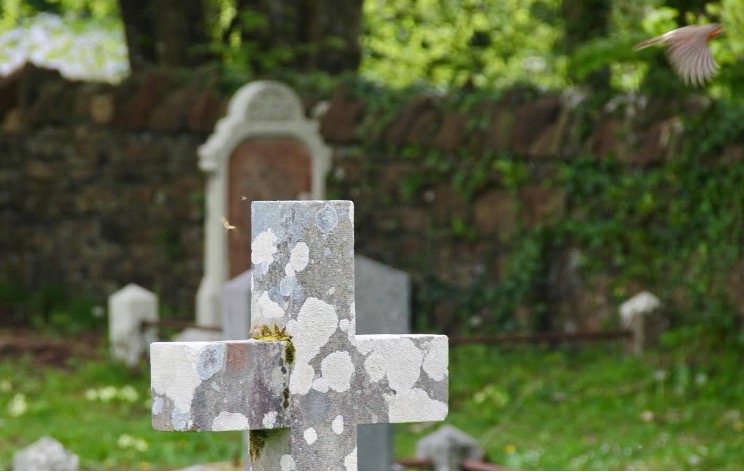
Canon EOS 60D
We start with leaving. A European Robin, Erithacus rubecula, has been investigating potential nesting material atop a tombstone crucifix. Not finding the sticks just right enough, she bursts to the right of frame leaving the twig to tumble back to the grassed and mossy ground. This whole scene played out across 30 seconds in far back corner of the Donegal Abbey graveyard, just outside of the city center. The timing of this shot was my first weekend and chance to explore the area outside of Glen Columbkille-proper. I met with the coastal edge of the wharf tucking a cemetery. This corner that just kept going held the ruins of an old church building, offering the old and discarded a chance to be used, captured, and tried again.
This very modern in micro journey holds incredible reference to our first semester of Ireland in History and Memory. First, the poem I Am, by Amergin, to which we read and created to in our first few weeks of the course, could have futurist lines inspired by the moment:
“I Am the twig that said not this time,
I Am the green in moss covered tombstones,
I Am the flight of feathers fleeing.”
The image also gives wingbeats to Mary Oliver’s The Wild Geese, in a transatlantic form of robins call both Ireland and the Americas home. I feel the pull of agency throughout this photo. The stone, the moss, the lichens, the ivy, the trees, the birds, the materials left behind all had to come into relation at this moment.
The energy exchange and coloration remind me of whispers of Celtic knotwork, marginalia and, most surprisingly, céilí dancing. One connecting the other to the other to the other in a delicate jointed fashion. After teaching us for an hour or two, and finishing with trial by music, Cian Mac Fhionnghaile took the cleared carpet of Oideas Gael to demonstrate dance patterns that are light, tight, and very bird-like. As a dancer, it is such a delight to tie my fascination with the natural and deceased worlds, with hours of sessions in the visual human media form of motion in intention. The icons of red and green in the graveyard also reminisce of John Wayne and Maureen O’Hara where the kiss first happens in The Quiet Man. While I did not have rain this time, I could picture them in the ruins around me, also watching the rust and rush of robins.
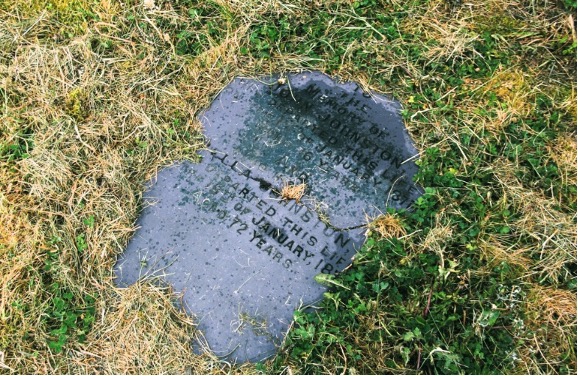
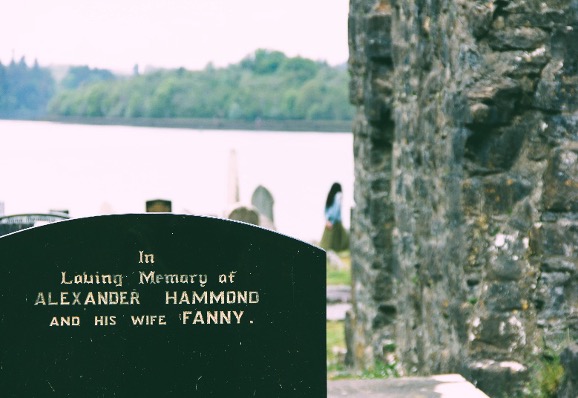
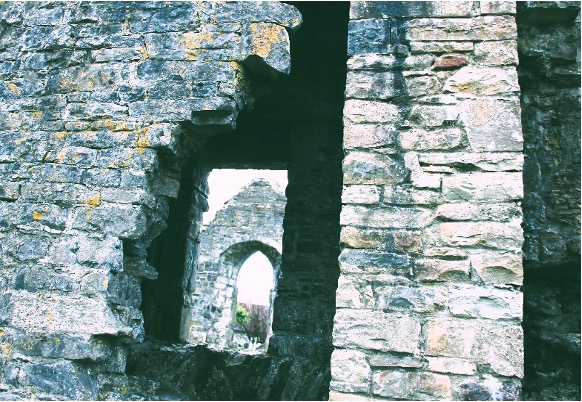
Maybe one of the most important parts of the idea captured here, is how normal death and remembering is in Ireland. Every graveyard I visited had time shared with others in their own spaces. I truly could write a full page or more on this concept, but for now I will leave you with subplates from the same site to introduce atmosphere before designation.
Canon EOS 60D
walking away.”
Canon EOS 60D
Canon EOS 60D
part ii
Canon EOS 60D
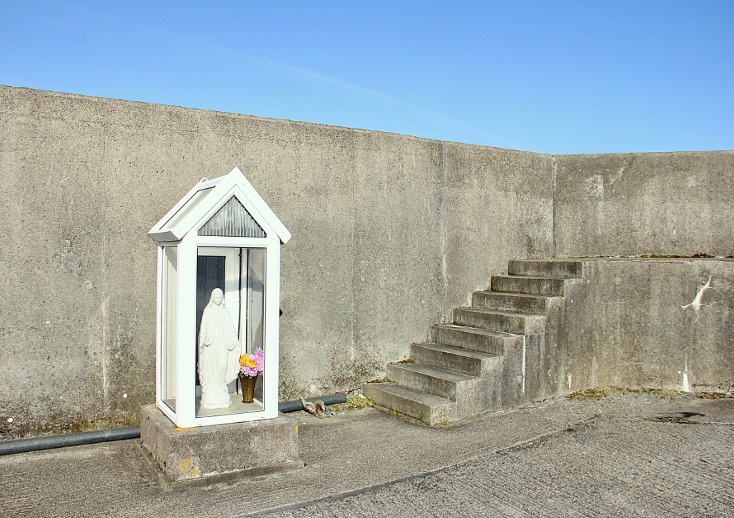
Next, we meet Mary. One of the most prevailing statuses of imaging is The Blessed Mother. Here she is situated in a glass house at the edge of a stairwell set against a clear blue sky. The photo was taken as we all milled about to board The Sliabh Liag boat tour. I pulled towards the water’s edge and found her waiting quiet and still while recognizing her colors all around: blue sky, gold flowers, white plaster. She was everywhere. Kitchen shelves, museum plinths, pathways, stained glass, little shrines to a woman bigger than Jesus in this version of lived faith. Having lived from 20 BCE – 40 CE, Mary went from a Jewish woman living in Palestine under Roman Colonization and Imperialism to the Irish cultural “principal intermediary for all sufferers.”
And yet, Mary pushes even further as the mother who knows all suffering. When you have so stark an example that pre-dates monastic writings by centuries, in media, mothers would be saintly…or dead. There is that idea again, death. As I have written before, death meets motherhood in a harrowing way in The Hanging Gale. As the Great Hunger persisted and rent prices have thrown the Dolan and Phelan families out of their homes, Maeve is held back from her son Joseph as he passes. Mary too, knows passing.
There is grace in the colors blue, white, and gold. They are rich and firm, but very gentle and welcoming. Blue is cool, white is witness, and yellow as gold is invitation. When facing concepts of seeing versus darkness, staying, or going, in all the ways these binaries have cycled through Irish history, you need visuals to hold all of that with you. In the Mary Gardens there is blessed beauty. In the shrines there is steady habit. Like the reach of liminality, there is no grace without borders. White is the permission structure to make a mess.
Mary’s prevalence is also pressure. She is right around the next bend, or through the next doorway. One more rock over. The presence is enough to keep shame as a silent, still, persistent reminder. It is very apt that saying the prayer of Holy Mary is a way to pay penance in church. Or in private between her, you, and the glass pane. In Mass, at Saint Columba’s Catholic Church, the priest urged us to pray Holy Mary in our worlds outside of church to bring great protection and blessing. This was especially relevant to how the very month was May, or the Month of the Mother. Across time and place, color and myth, ritual and guidance, Mary’s statues and kitsch make for one powerful woman in Irish culture filled with femme power structures.
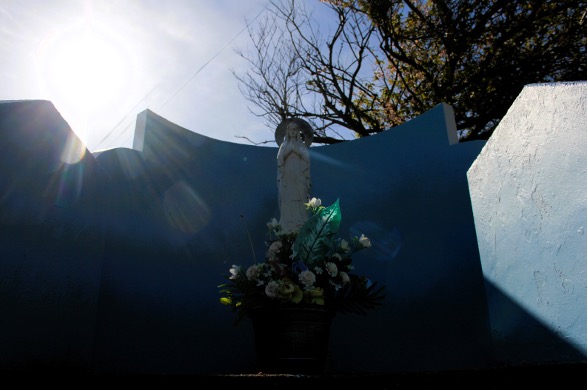
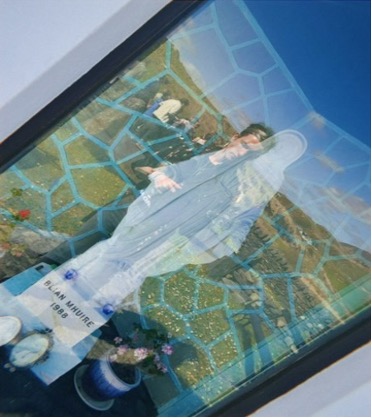
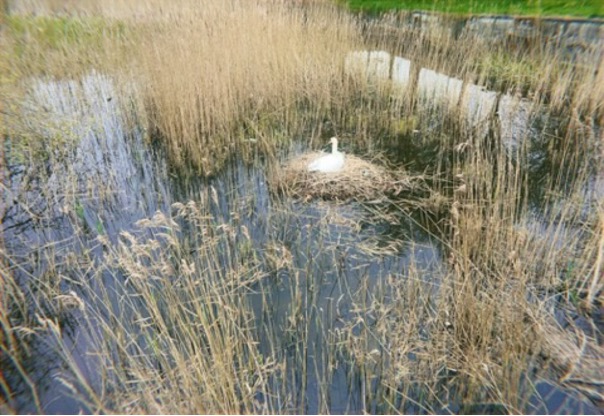
Here Part II holds a series of subplates. While a picture is worth a thousand words, it is important that like in Bardic and Monk traditions, words and visuals work together.
her fake flowers.”
Canon EOS 60D
iPhone 17e
iPhone 14 Pro
part iii
Canon EOS 60D
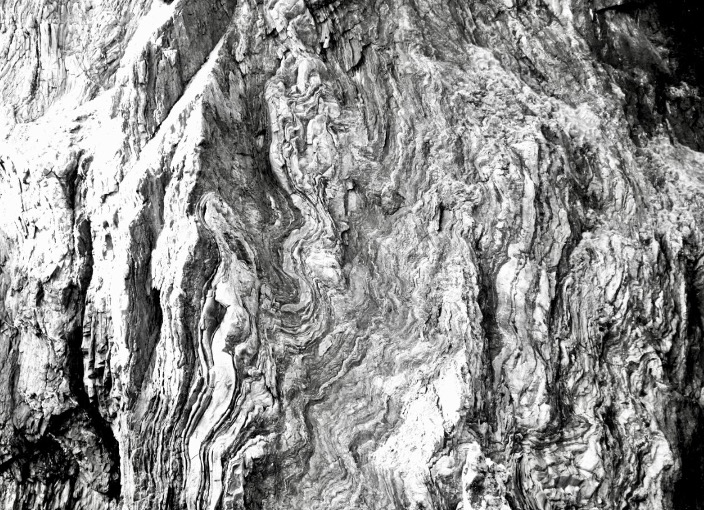
Having greeted Mary on the wharf, now we travel out along the watery base of Sliabh Liag, some of the tallest seaside cliffs in all of Europe. Our captain was Paddy Byrne, the founding boatman of this company. He has been bringing people out to witness their majesty for thirty years, telling stories and offering ideas at each stop along the way. The night prior we watched a documentary from Cormac McGinley titled Aillte, which is Irish for cliffs. He shares the place names and myths that are shaped by the patterning and curvatures of rocks. This primer was ahoyed by Paddy’s humor, self-mythos, pride, and experience.
In the importance of place, he pulled the boat, one of four ships in The Sliabh Liag Bounty fleet, slowly to a stop and popped out to ask any of us if we wanted to take a swim. He had overheard Maddie and I joshing about the beaches, and offered a story: “One time, I had a gal offer to pay me triple to swim out to the shore and stay while I ran more tours. Now, sure people pop over to get a rock or a stone, but I figured I could let her have some time. As I am circling back, she climbs on board and mentioned pebbles sprinkling down. The next day? The whole of that cliff face fell. You see those boulders? Those are the big ones that managed the fall. No more people swimming and staying.” Now, this is a story of a story. A 1,972 ft journey down to where one woman was just one afternoon ago, and the warning it is still teaching to this day. And for me, this plate holds all that texture against a backdrop of time so long ago, when these cliffs were first shaped and how they keep transforming.
Even though this is a very still photo of a stoic stone, it calls to movement. This pulls from Plate I as well, in that the Irish have faced movement en masse. The diaspora has gone onto world-wide influence from the age of saints and scholars, spreading music and knowledge across the mainland and abroad, to the Potato Famine forcing people to find new homes. This has become a direct influence in America as well, from politics to union and workers’ rights to religious leadership. While some see giants in these cliffs, I cannot help but see Spencer Tracy’s able and tried face, or the rising of the priest, Father Barry in On the Waterfront. These two men, filmed in black and white, hold history and stories of people who came over and still climbed social cliff faces. Then to see the cliffs from the top, and still be able to climb even further? I understand how even in the shifting, these fronts keep calling people like Cormac and Paddy back.
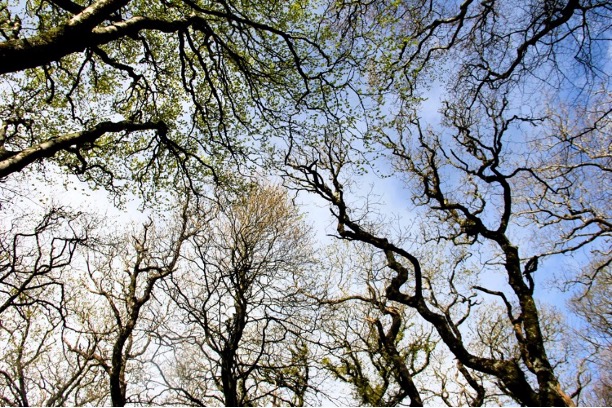
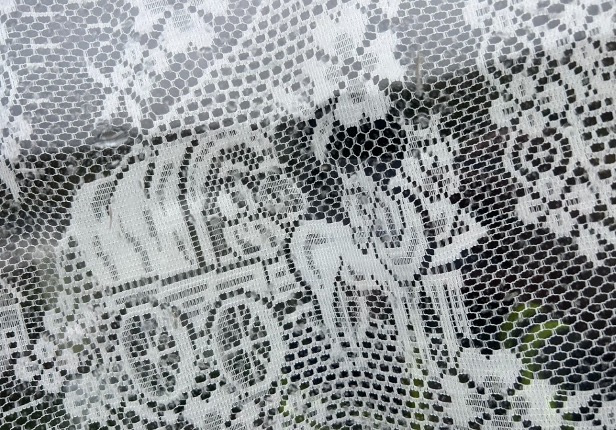
The following subplates will also take static capturing in photos to impart the feeling of subtle shifting. First, a fingerprint of a forest as found upon looking up. The second, lace curtains in the window of Brian Kavanagh’s paternal home, whose father immigrated from Donegal to New York. Removed from the time of class judgement, yes, but not apart from the impact.
all the way back.”
Canon EOS 60D
iPhone 17e
part iv
imagine the stories.”
Canon EOS 60D
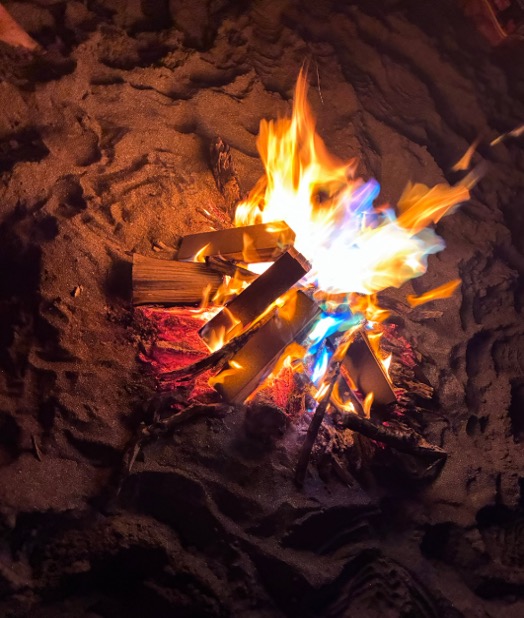
Time to gather around the fire. As the sun set on Bealtaine, wood was offered and fire was lit. Later beach flames needed prayers to Brigid, both goddess and saint, and Mary, but tonight this one took brilliantly. How fitting that the hearth built in sand once again brought together stories, experiences, and opportunities as it had since the time of court tombs and earlier. You can see all the footprints soon to be washed away by high tides, showing the warmth, we all shared. Then, like the times of flames in signal towers, with one watching over our shoulders, someone threw in copper chloride, and we were flashed with bright blue for so long as the chemical and physics danced out. While based in science, there was a magic to this evening under sunset and moonrise.
Chemistry would come up again in a few weeks. Coming out with Dr. Margaret McCaul, we would perform a valiant citizen science endeavor sampling intertidal water at various gradients. Water forming hydrogen and chemical bonds with various resources like phosphorus and ammonia reminds me of the poem Traces by Mark Vinz. Not in a literal way, but when we think of the metaphysics of this plate, it is an invitation to reimagine connection, to land, to wit, to knowledge, to each other. Rónán Ó Dochartaigh, Paula Harvey and each of our tour guides brought us to and across land and the power it holds. That same power this fire is transforming. We had Michael Cooper, who knows what maps do to people. He provided a real-life encounter with the drawn-out aftermath of events in Translations by Brian Friel. Nicola Garvey brought gravity and organization to a wildly diverse group. Mick Brown knew that sometimes people have varying needs hindering such that a tour up hillsides to see rock beds can not be allow. David Gillespie built breaks into a journey to the tower where flags no longer fly, the British no longer own, and flames are no longer lit. “We aren’t trying to break any records!” he reassures us time after time. Who needs a flame in a tower when you could have one on the beach shared with those being transformed by the people we learn from?
One of the most important parts of fire is not just what it takes or offers, but what it leaves behind. A book where fire was always present in a cigarette ablaze is Frank McCourt’s Angela’s Ashes. Starting the book, I thought there might be some direct correlation that Angela had passed; Ireland is a burial community, and you can bury ashes in a plot. But it turns out it was the leftovers of her coping mechanism, sourced by flame, leaving enough parts of her everywhere to earn the title of her son’s creative nonfiction memoir. And in that, fire is so complete. It is gathered for, labored after to start, committing a physical act of transition for matter and gas, nurtured to keep burning and leaving behind memories shared, laughs thrown, footprints pressed and oceans swam in under the full Bealtaine moon. There are no subplates for this essay. The whole image speaks for itself and to more.
part v
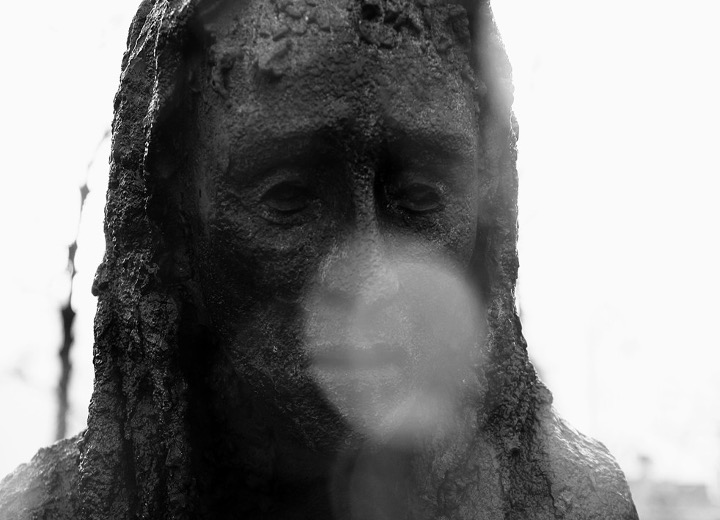
Canon EOS 60D
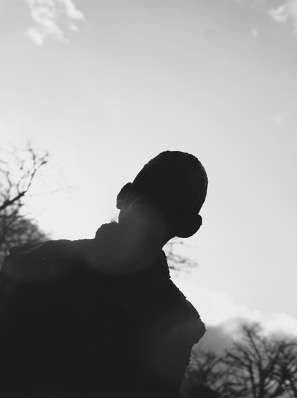
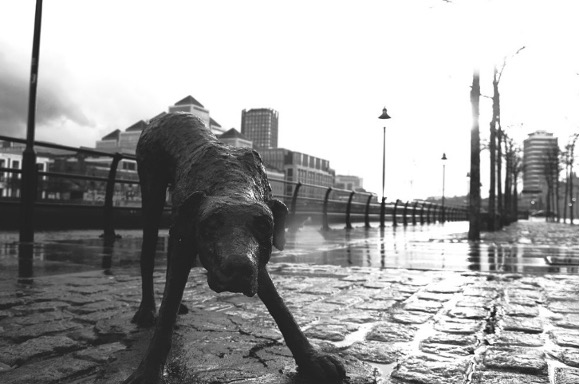
Back in Dublin, within the Pale as it were, in the South City Centre. Here we meet close to a mother on a journey to survive with her family. Her face is pulled in, both in design texture, but also in frame. The sun was shining as I made my way through the trees, before I was caught in a massive downpour of rain with sideways wind. I stayed with them for as long as I could but even I, a rain child of the Pacific Northwest, needed cover. She stayed and stared the whole time before it finally quieted down enough that I could share closeness with her again. Now, to be frank, this is a statue made of rock and metal. But that otherness, is by design. You walk along the quay with them, through them, around them, having to interface, even if that’s just a few minutes of a one-time trip through the bustle of downtown Dublin.
By breaking a cultural paralysis around the Potato Famine that occurred in the late 1840s into the early 1850s, President Mary Robinson spoke on the need for remembering together to happen. This followed from a bravery in politics, to the continued expression of art. The Famine Road by Eavan Boland shares with us the capital of the reasons there was food in Ireland, but people were dying in extreme numbers. “The Relief Committee deliberated: ‘Might it be safe, Colonel, to give them roads, roads to force from nowhere, going nowhere of course?’” This brings the stone into the Memorial’s own story. Made of rocks like those and thrown taller than most, they are not going anywhere. That permanence matters, much like Mary’s statues and figurines. Suffering can be gentler when it’s seen and shared, and many versions of that message get planted to keep the people impacted (by the art, by the books, by the poems, by the museums, by the first-hand accounts, by family) All around, landlord temperaments, land designation, even two friends sharing a passing joke, as well as people’s beliefs about the trauma, was a part of everyday life happening in minutes or days.
Death is hard. Hunger is hard. We were given the grace of not having to write about the atrocities that this era was. It was not the first of its kind, but it brought particularly profound consequences. To prepare, the reading was Paddy’s Lament: A Prelude to Hatred by Thomas Gallagher, and there were many days over seminars and classroom sessions, including poetry and music, to create art of our own as a response. The Hanging Gale – as mentioned in Plate II – was our film for these weeks of class. In real time, it is so hard for me to write about this. I fear, like I do when speaking Irish, I do not know the right words. And yet, as politics keeps coming through, the former Minister of Education and the Gaeltacht Joe McHugh would attend a wake across the country in place of a public presentation. As Siobhán Ní Churraighí said, “You are remembered for what you miss.” And either way, a miss was happening, but when a community shows up in the way this memorial family is showing up, even to the end, death can be lighter and realer.
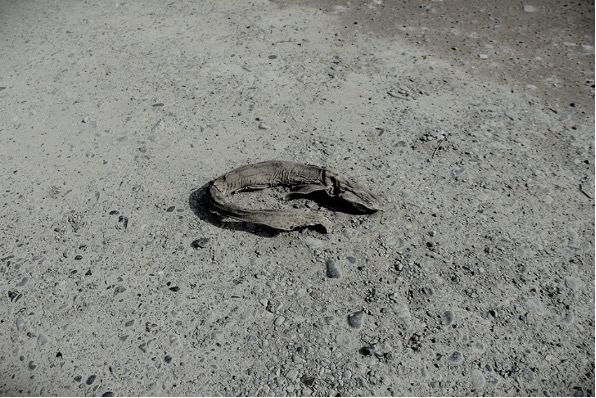
Below are subplates of what hunger does to a body. No more words, like Plate I, just photos as impressions in the city’s puddles.
Canon EOS 60D
Canon EOS 60D
Canon EOS 60D
part vi
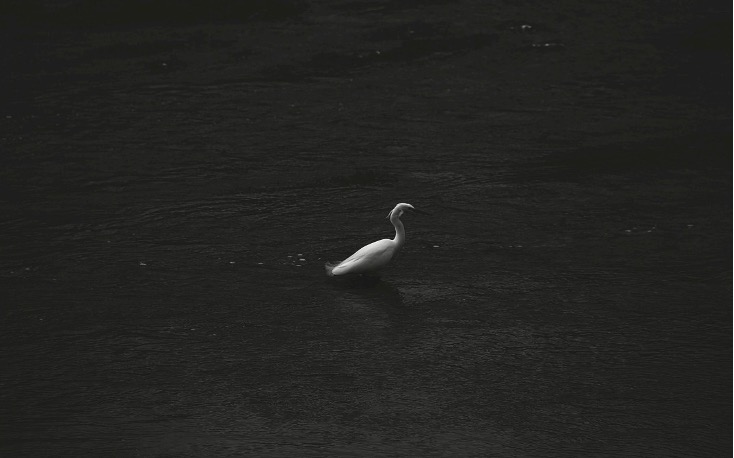
Canon EOS 60D
After river-side memorials, we have an in-river moment. I had caught a bus to Salthill, just outside Galway-proper. I started down a trail, wondering if I might somehow be trespassing on a private lane, simply for the fact of an ocean front park. I had already visited the beach earlier in the week and I was excited to be back exploring even further. Suddenly, as I snuck around some rocks, squish went my shoes…or more aptly squelch, as Paula Harvey would so sassily warn us in later weeks. The shoes? Ruined. The adventure? Just officially begun.
I rested on the rocks and kept pushing further along the inland coastline. Ever so bendingly, the water shifted from resting to movement. That is where I stumbled (literally, there were holes everywhere in the moist ground) upon this fantastic fellow. While I would shoot a couple frames, he went on to strike and consume a trout twice way round the size of his gullet. Named a little egret, or Egretta garzetta, these are herons native to the Irish intertidal regions, where fish, mollusks, amphibians, even other birds, and reptiles are on the menu. I got to witness the still stalk of peace turn into a flamboyant show of strike, catch, and swallow. A full arch of gaisce in a few patient minutes.
Although to an opposite extent, this moment reminds me of the joy in discovering something you have never encountered before, like Dr. Lily Penleric finding the gory ballads of the Scots-Irish deep in the Appalachian Mountains. Like her in the film Songcatcher, recording this was important to me, but the experience of feeling, being, seeing, and togetherness of this moment was a treasure I did not need science or artistic standards to tell me how to create. The rich feelings followed me into beach fires and storytelling performances loaded with music and poetry.
Myth has been such a powerful force throughout Ireland. Each person I met and learned from had some touch of this, and yet Geneviève Galarneau and Dubhán Ó Longáin’s night of music and words spoken rings through for this egret. The role of a listener is to watch the flames and imagine the images while being transported to different times and places, real or otherwise. This plate offers us the same invitation: What prey would fall next? What waterway was still to be danced in? Who else is watching? The beauty is that these questions are each viewer’s to form. And we are all allowed to be present in the power that curiosity, belief, and engagement each teller of each story offers.
A powerful counterpart to mythos is public expression. While the robin reminded me of céilí dancing, the egret and its trout remind me of the Donegal two-handed dancing. There’s bravado in both, certainly, but this egret was far from dancing alone. Fish as the object desired, the blue heron thirty feet back, or me teetering on the bank edge, we all coordinated this scene together. And such was the first dancing session! With over fifty people in the room, we all caught as much fun as we could handle. Some helping, some watching, some trying our best, it was about as vibrant as this white bird against black water springing into action. Dance can hold such weight when we are all doing it. There will be no subplates so we can all catch a breath.
part vii
iPhone 17e
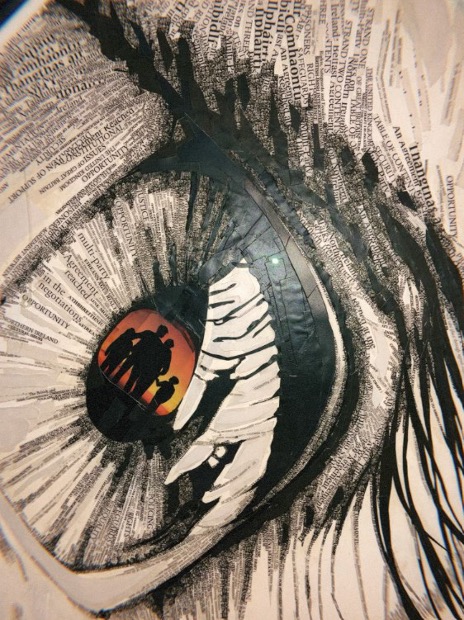
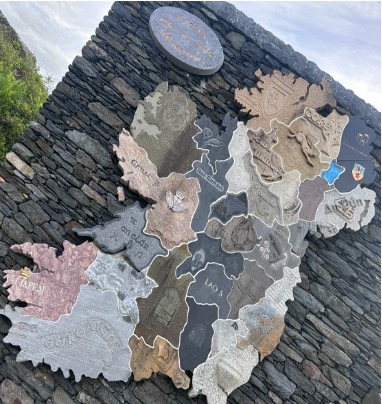
Now, to the North we arrive. Here we meet family again. The whole of this eye is formed from Irish words like a mosaic cut from headlines. After spending the first part of my multi-hour wander through the Ulster Museum in the now-extended exhibit “How do you create a community? The Inspiring Story of Belfast’s First Urban Gaeltacht,” I found this art piece, The Agreement, waiting to be observed. The pupil holds at the same time, the story of couples from the 1960s, who said we can talk this way too, as well as echoes of the Troubles which would escalate in the following thirty plus years. But it also holds a future being imagined where Irish can be as daily as English.
The Troubles was another whole wing of the collection, and it was a lesson in which we read and studied but offered up visual work as a response. After Plate V and the harshness of Famine, I want to not try and assign too many of my words to this massive chapter of the island’s history. There are much wiser, and even closer, voices like Michael Cooper who walked us around Derry a few weeks later. And there is art like Some Mother’s Son or the book Making Sense of the Troubles by David McKittrick and David McVea each offer a diversity of perspectives much more fitting than I could attempt. A Grafted Tongue by John Montague and the Emigrant bring language into this story much like this photo, and after nine months studying Irish, here I can try my best.
“We want to catch them by surprise,” Rónán offered us on the first day of class. Said as an encouragement to try speaking directly with local community members, I never was quite brave enough. Sure, I could offer a “gabh mo leithscéal” here and a “go raibh maith agat” there, but those phrases are one and done as you’re passing on the busy street or hopping off a bus. I was scared to get caught by surprise, even when I always had English as a fallback. Studying at Oideas Gael, an institute for Irish learning in an official Irish-speaking district, or Gaeltacht as priorly mentioned, was a reminder on how critical doing whatever work you can with the act of listening and speaking.
At the two-week point, Seán Ó Dóláin started addressing the class exclusively as Gaeilge for the remainder of our time there. He gave us heads up and stood by his boundary. This was such a dynamic way for me to understand; there are so many ways to learn.
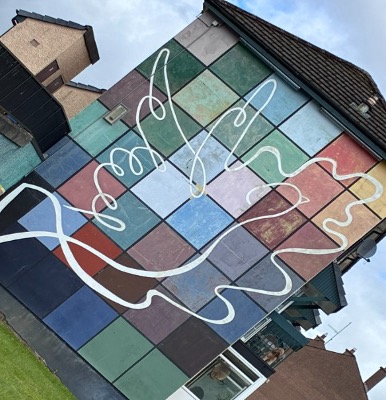
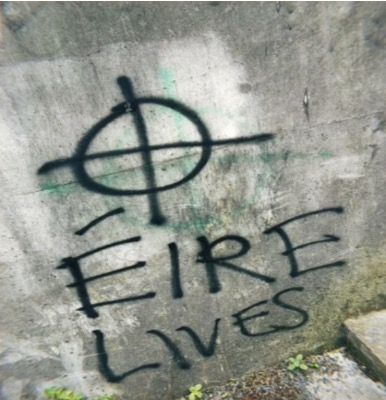
I bought books written in Irish. I started watching shows and listening to the radio. Siobhán mentioned a former student at the institute who would go on to establish a Gaeltacht in Canada, who “would sleep with RTÉ in his headphones and a box over his head. Said it helped him learn!” That was all I needed. I am still playing RTÉ at work and tuning into Ros Na Rún. My goal upon Seán’s first ask for reflection was “to come away with ways to see the world in a different way,” and as we hugged goodbye he offered, “I am really seeing it click for you.” Damn it, I am going to keep working, like all of us had, have and will be. Here are subplates for bravery.
iPhone 17e
iPhone 17e
iPhone 14 Pro
part viii
iPhone 14 Pro
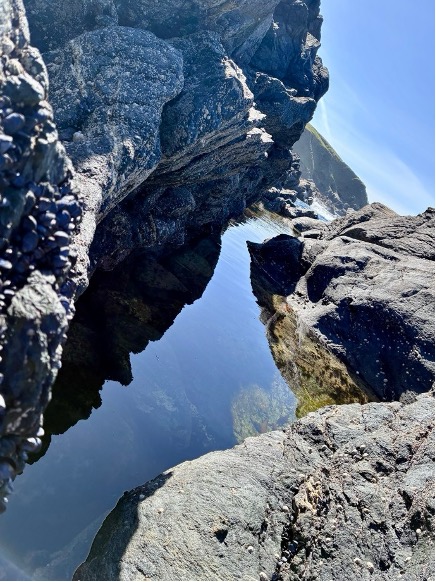
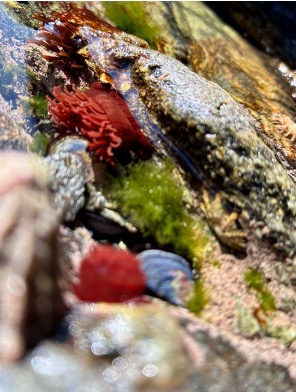
Back to the water. This afternoon we were given a choice: art as knitting or art as drawing? With the weather glowing, I felt I could coordinate my hands best to creative impressionism. We were all given a lift to just a way up the road, to a small corner fishing boat launch. After our supplies had been delegated by Conal Mac a’ tSaoir, he granted us a few minutes to think about how we were going to see the world for this assignment. “Look small, draw big” was the concept I took with me as I went off to explore for a subject. Sea Thrifts, Armeria maritima, (also known commonly by who you are asking as sea thrift, or even just more pointedly, thrifts) offered up a brilliant palette and I had markers too. Perfect. Well, these little pink flowers lived up to their name and allowed me to spread my time across mediums and explore even further down the rock line. Here was a world of sounds, colors, smells, wishes, and life abundant kept on being, with or without me.
Having worked to create six work pieces in Kate Newmann’s poetry time, I was feeling deeply inspired by how the world was sharing itself with me.
“I finally reach the brink.
here the kelp is tousled in currents that could kill
I stand, imagining myself a mermaid at the edge
‘if only I could breathe under water’ I think to no one but myself.
then? my mind dives in anyway” – untitled, T
Like so many before and after her, there was no command of how time was to be spent outside of respect. She had a beautiful way of offering humble prompts and then pushed each of us to share, if we could. The respect is power. Ireland has origins in Brehon Laws, the word holding more meaning than the writing of a deal, where shame is a force for accountability. Over thousands of years, this has bloomed into people who know that shame is the green shaft that lets bright pink respect bloom.
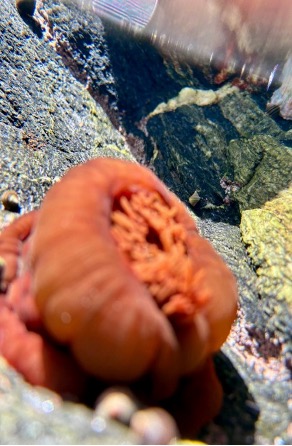
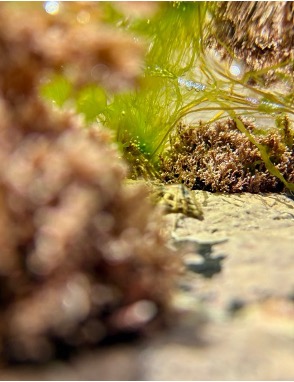
A new form of respect I formed was sourced from our second poetry session with Dr. Dubhán Ó Longáin. He introduced creating poetry with rhythm, syllables, and structured meters. This bled into our time with music, whether that be children’s tunes like the Herring Song or a personal classic Óro Bog Liom Í, and language that Irish is an artistic expression as much as it is communication semantics. After six months of singing and practice on language back in the States, it took all these different examples and the final sealant for me to maybe click in as Seán offered. A line I am holding through the last school year is this from Gearóidín Breathnach: “Language doesn’t matter when feelings are understood.” Below are the subplates of deeper, or shallower, found worlds.
iPhone 17e
iPhone 17e
iPhone 17e
part ix
Canon EOS 60D
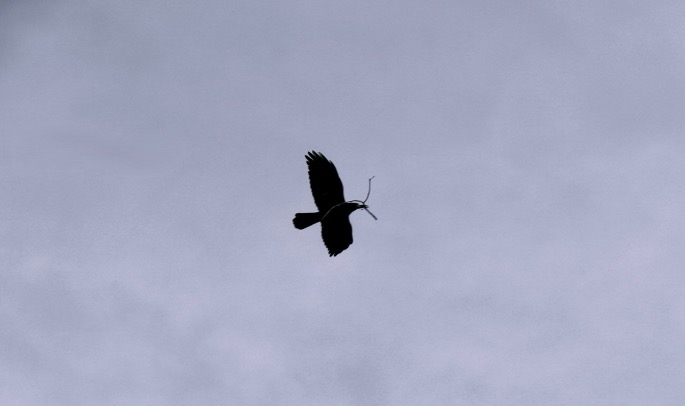
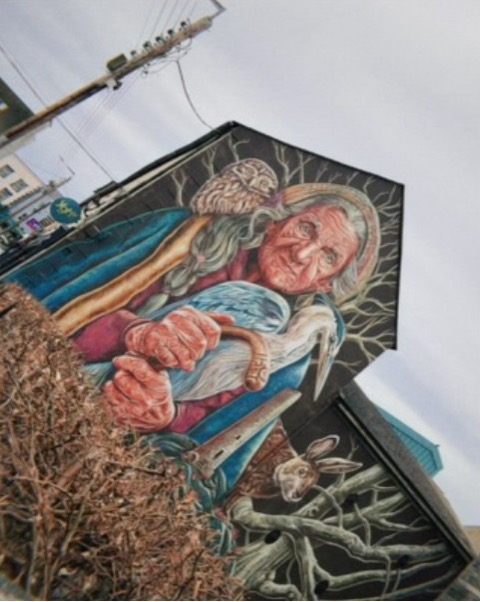
This time the stick was just so enough to be enough. Flying high overhead in Phoenix Park, one of the largest open-air parks in Europe, is a rook, Corvus frugilegus, with a twig headed home. By following her, I was able to discover a whole rookery. Up in the tree branches you could hear chicks calling out for any sort of thing. Left and right, up, and down, parents would come and go.
The people of this island, in the North and in the Republic, have a knack for keeping their birds fed. There is an indirect harkening to this idea of birds as messengers to the Otherworld. Not even so directly as a god might, but as community connecting across time and place, sharing time and stories. As does in communication, reports get offered, and it is better to be one the birds are fond of, rather than frowned on. There is accountability here, even unity. W. B. Yeats understood that paying attention to natural impressions on our own world was so critical and could be done in such a way that other people can know that without having to name it. Bram Stoker felt this too, but in a way even darker and more mythic than Yeats. Colors and energies still matter as much today as they did when clachans first built their huts in circular units; faith, regions, drawings, and weaving, all work together to keep certain icons of culture present.
The Táin is such an interesting parallel to draw here. As Eithne Ní Ghallchobair shared, a story takes on what the teller offers. Starting as a story told around fires and by bards, with music and poetry peppered throughout, it was taken down into writing when the first Catholic Monks arrived on the shores. There is an old rule that plays out in written down a story told, the author holds the pen. One school of thought direct word-for-word is best. One school is interpretation of translations. But that brings up a challenge: do we preserve the story in how it is written down, or will we imagine new audiences to write towards?
Ciaran Carson translated the version we read in class, and while Mebd was a queen rather than goddess, the divine feminine did come through mythologically with the Morrígan. As if a lovers quarrel over who came with the grandest dowry leading to an island-wide war was not majesty enough! The iconography used for this war goddess is that of a corvid. She grants future-casts on outcomes and fates all while remaining transformed a bird. The rook and the raven look alike, and yet like there is difference between women of myth, there is a difference within families, taxonomically or relationally.
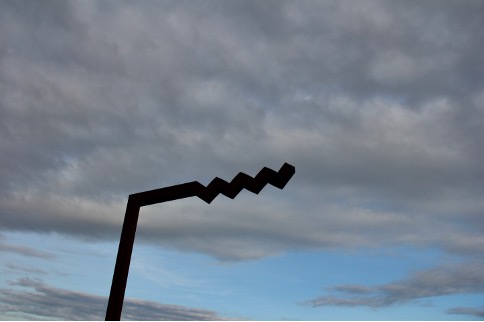
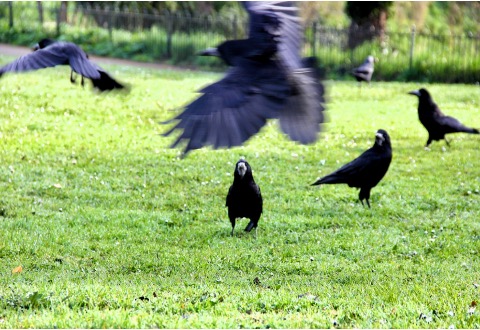
Back to public relations. The act of gathering across natures is so critical in Ireland. The rook, in partnership with corvids like the magpies, jackdaws, or hooded crows, adds a very distinct dimension of the crone. Wise, learned, prepared, but also teaching and orchestrating. We heard from across traditions that there is a gap between the old and new ways. People still know to a mastery level the old ways, and the kids are learning these skills too. As the kids grow up, they are learning with language that there are whole ways of being that we can preserve and revere. The crows make me hope, as a trans person tuned to icons, that keening women will find their call again. These subplates present chaotic gatherings, jagged outlines, and even more public art to share that nature and myth are still co-occurring.
Canon EOS 60D
Canon EOS 60D
iPhone 14 Pro
part x
iPhone 14 Pro
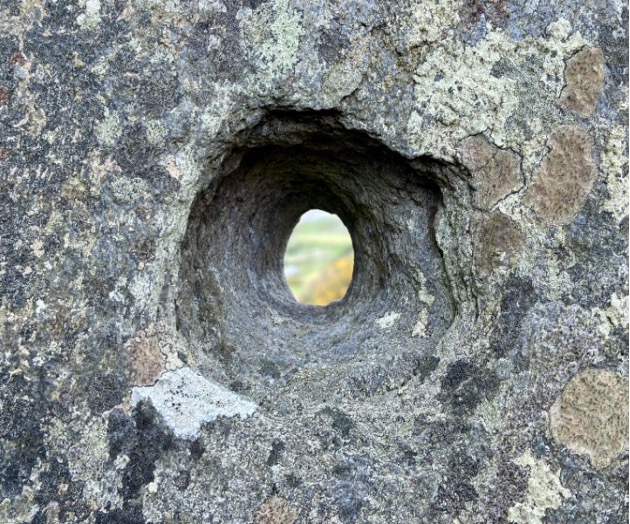
Do you see heaven? They say the pure hearts can. I had heard the myths and seen the pictures for months before seeing this standing stone myself. Tucked way back behind a grove of trees, some of the only in the valley, was a stone where history kept living and memory kept being formed. It is a stop on the Glen Columbkille turas, dating back to the times of Saint Columba which still hold religious and cultural significance to this day. The pilgrimage is in June, but we got different experiences of it from different people. Elena Pollina offered us a journey that had to be spun up on the fly. As we made our way round the bend in the road, we had to stop to see The Stone.
None of us saw heaven, but my camera saw a blur. The liminality holds so much tension here. Who even can say what heaven is? The job is in the action of asking, and peeping to try, just maybe. Across Ireland, liminality plays out in every way from the macro to the micro. From time that cycles around itself to ecosystems under constant evolution, you must be able to hold space for the melding and blending that is seeing. Liminal energies and ideas see the space of the border around and say I will make the middle matter.
Molly Sweeney by Brian Friel plays out a version of this message. Molly is blind and can only see forms and light changes. Despite having the men of her world hold grand ambitions for what could, nary even should be done for her, we watch Molly share how complete her world as is. Often none of us can do everything: seeing, doing, sharing, being, speaking. But so long as we can have our fill and do our part, we are not just helping with boundary co-creation but also actively engaging that melding middle.
The lichens and weathering of this stone is such that one could imagine the seal pelt of Jacks as he splashed with Jamie along the Donegal coast. The Secret of Roan Inish does not just hold myth and nature as subjects of each other. It captures the very Irish idea that places, family and caring enough to try is enough to see a story through. There does not even need to be a quote happy ending. A film like An Cailín Ciúin or Brooklyn show that the ending can drop off a cliff, and we can be left to watch, as Siobhán did as a toddler, the stick fall into who knows what. But the change, that is what matters, whether it be crossing the Atlantic, falling into a fairy well, or linking fingers through a hole in the courting stone, or any other millions of opportunities.
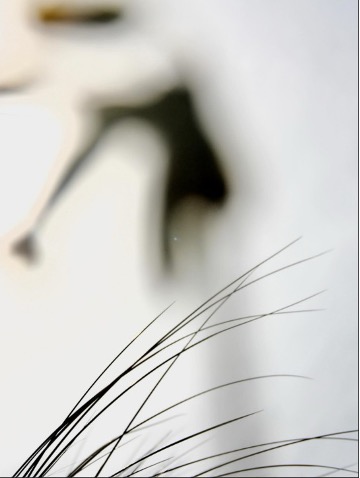
In the following pages, there will be a final set of subplates, and an outro to map us back together, but here, less words are more and it is ok to take yet another breath. In ancient Ireland, breath was one of the holiest indicators of life. As time carried forward, a dead body would be left on the bed for several extra days, just in case one last breath was taken. And here we can pause as long as is needed to finish the last part of our journey steadily and strongly. As Seán Williams wisely put it while talking about book writing, “a book doesn’t stop being written, you decide when to walk away.” And here, we will walk into what is next.
Canon EOS 60D
prolonged exposure”
iPhone 17e
Canon EOS 60D
And now we have made it here, the end of essays and plates to give power to an argument that myth and nature are synonymous. Like the lichen growing in Plate X, or the algae in Plates VIII.II-III, symbiosis is very delicate but robust interaction that occurs across media and mediums. Yet, this finely tuned balance can work to maximizing ends. Not in capitalist production-only matters, but towards the ends of togetherness via opportunity.
Rocks have featured heavily in the plates. While not always permanent or stable, they offer an idea of formative security. Birds, on the other hand, bring flight and choosing. The fire gathers people together, while also posing a risk. Blue and white like weather promises protection and temporality. Trees are still here. The deer hid between and the ducks flew around them. Water kept moving, showing that different points hold different values. Lace windows held back prying eyes offering wagons as a way out.
This is not a utopian paper. within the last nine months, and the class Ireland in History and Memory, we have met death, traumas, mourning, and injustice all throughout. As I started the paper, I stand humbly within all of this, and that humility means that I recognize Ireland as a place rich with complexity. Most of all, I learned that Irish people want to share together, not pretty or romanticized but in a we-witness-each-other way.
Photography is an art that lets you practice seeing. Sometimes that is enough and you get a pretty picture. To further mature as a creative, photos give us the ability to be engaged with what we are laying attention upon, across tools, light, color and to seize one frame of the whole act. Ireland is a place where engagement across backgrounds and abilities is in a constant state of bloom. But the bloom is not just a flower with a butterfly, it is a whole natural process of growth and development.

